SULAM-Community: Health Literacy Enhancement
Transforming Health Literacy Through Language: A SULAM-Based Parasitic Infection Prevention Programme in Bahasa Jahai
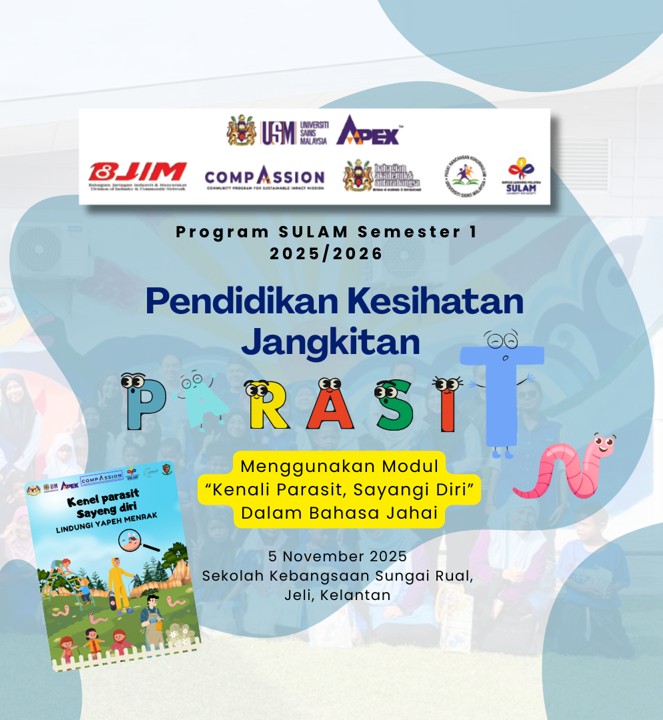
A total of 62 Orang Asli pupils from Sekolah Kebangsaan Sungai Rual, Jeli, Kelantan participated in a Health Education Workshop on the Prevention of Parasitic Infections organised by the Biomedicine Programme, School of Health Sciences (PPSK), Universiti Sains Malaysia (USM), on 5 November 2025. The programme was conducted under the Service Learning Malaysia – University for Society (SULAM) initiative and implemented through the Medical Parasitology (GTB323) and Medical Bacteriology (GTB322) courses, coordinated by Ts. Dr. Nurhidanatasha Abu Bakar and Dr. Nik Norliza Nik Hassan, respectively.
The programme titled “Pendidikan Kesihatan Pencegahan Jangkitan Parasit kepada Kanak-Kanak Orang Asli Menggunakan Modul ‘Kenali Parasit, Sayangi Diri’ dalam Bahasa Jahai”, aimed to increase awareness and promote preventive practices related to parasitic infections among Orang Asli children. At the same time, the programme provided 24 undergraduate students from PPSK, USM, with valuable experiential learning opportunities to apply their academic knowledge in a real community setting while strengthening leadership, teamwork, and intercultural communication skills. The initiative was supported by six lecturers, four support staff members from USM, and six teachers from Sekolah Kebangsaan Sungai Rual, reflecting a strong collaborative effort between the university and the school community.
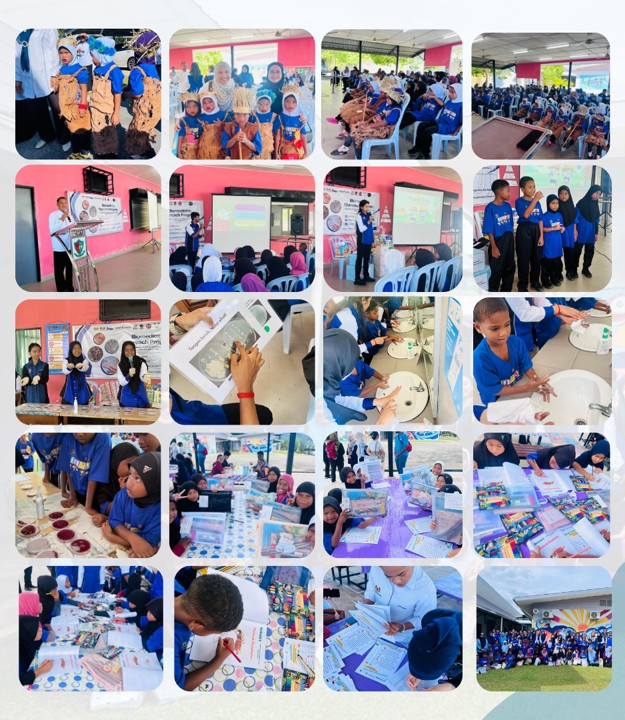
A key highlight of the programme was the development and implementation of a culturally adapted health education module in the Jahai language, designed to improve comprehension and engagement among the pupils. The workshop featured a variety of interactive learning activities, including a health talk supported by animated educational videos, quizzes and games based on the module, colouring activities, and hands-on demonstrations of proper handwashing techniques.
Programme evaluation indicated encouraging outcomes. Among the 42 pupils who participated and completed both pre- and post-assessment questionnaires, 52% demonstrated an improvement in knowledge scores, while 31% maintained consistent good performance levels. In addition, the handwashing compliance assessment revealed high adherence to the 10-step proper handwashing technique, with nearly half of the pupils achieving excellent scores. These findings suggest meaningful improvements in both health knowledge and hygiene practices among the participants.
Beyond the measurable outcomes, the programme also strengthened collaboration between USM and the Orang Asli community in Jeli, fostering sustainable university-community engagement. The initiative highlights the importance of culturally inclusive and language-sensitive health education in promoting behavioural change and empowering vulnerable communities to take proactive steps toward better health and well-being.
- Hits: 759